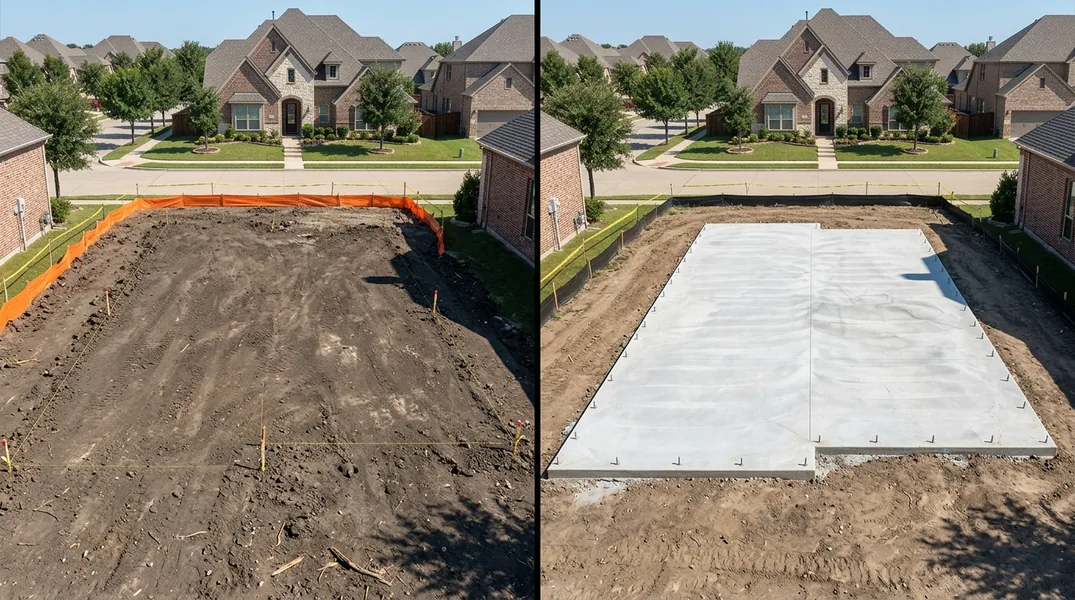
Understanding New Construction Concrete Slabs in Frisco
Buying a new home in Frisco is exciting, but the foundation is one of the most critical components you'll inherit with your purchase. Most new construction homes in the Dallas-Fort Worth area, including Frisco, sit on concrete slab foundations rather than traditional pier-and-beam or basement systems. A concrete slab foundation is a single, thick layer of concrete poured directly on the ground, and it supports the entire weight of your home.
Unlike older construction methods, modern concrete slabs are engineered to handle the Texas climate, which includes significant temperature swings and occasional moisture challenges. However, not all slabs are created equal. The quality of the soil preparation, concrete mix design, and installation process directly impacts how your foundation will perform over the next 20, 30, or even 50 years. As a new homebuyer, understanding what you're looking at and what questions to ask your builder can save you thousands in future repairs.
What to Inspect Before Closing on Your New Home
A builder foundation inspection is your opportunity to catch problems early, before you sign the final papers. Most builders will allow a walk-through inspection in the days leading up to closing, and this is the time to look closely at the concrete slab. Start by examining the surface for cracks. Small hairline cracks (less than 1/8 inch wide) are common in new concrete as it cures and are generally not a concern. However, wider cracks, especially those that run diagonally or show signs of movement, warrant closer attention and should be documented and reported to the builder.
Walk the entire slab, including areas under the kitchen, bathrooms, and any room with plumbing. Look for signs of settling, such as sloping floors or gaps between the slab and the baseboards. Check the garage floor as well, since it's often poured separately and can show different settling patterns. Pay attention to any damp spots or efflorescence (white, chalky deposits) on the surface, which may indicate moisture intrusion. If you notice anything unusual, take photos and request a written explanation from the builder. Don't rely on verbal assurances; get everything documented in writing before closing.
New Home Foundation Warranty: What's Actually Covered
Every new home in Texas comes with a builder warranty, but the specifics vary widely depending on the builder and the warranty program they've enrolled in. The Texas Department of Housing and Community Affairs oversees homeowner protection, and most builders participate in a third-party warranty program such as NHIA (National Home Inspectors Association) or PWA (Professional Warranty Association).
A typical new home foundation warranty covers structural defects for the first year, with some coverage extending to ten years for major structural issues. However, normal settling, minor cracks, and cosmetic issues are usually excluded. It's crucial to understand the difference between a builder's warranty and a structural warranty. The builder's warranty is their promise to fix defects they caused; a structural warranty is typically insurance-backed and covers major structural failure. Before closing, request a copy of your warranty documents and read them carefully. Ask your builder's representative to explain what is and isn't covered, and get clarification in writing if anything is unclear.
Common Concrete Slab Issues in the Texas Climate
The North Texas climate presents unique challenges for concrete foundations. Frisco experiences hot, dry summers and occasional heavy rains, which cause the soil beneath your slab to expand and contract. This movement, called heave and settlement, is one of the leading causes of foundation problems in the region. When clay soil, which is common in Frisco, dries out, it shrinks; when it absorbs moisture, it swells. Your concrete slab rides on top of this dynamic soil, and over time, uneven movement can lead to cracking, sloping, or even structural issues.
Another common issue is inadequate drainage around the foundation. If water pools near the perimeter of your home or if gutters and downspouts direct water toward the foundation rather than away from it, moisture can accumulate beneath the slab. This can lead to soft spots, efflorescence, or even mold growth in crawl spaces. Poor site grading during construction is often the culprit. Before closing, verify that the lot slopes away from the home and that gutters and drainage systems are properly installed. If you notice any areas where water might pool, discuss this with the builder and request corrective grading if necessary.
When to Call a Professional: Post-Closing Slab Assessment
After you've closed on your new home, consider hiring an independent foundation engineer or concrete specialist to perform a detailed slab assessment. While this is an additional cost, it provides peace of mind and creates a baseline for future comparison. A professional can use specialized equipment to measure slab elevation, detect voids beneath the surface, and assess soil conditions. If any issues are found early, you may still be within the builder's warranty period and can request repairs at no cost to you.
If you notice problems after closing that you believe are covered under warranty, document everything with photos and written descriptions, and contact your builder immediately. Keep records of all communications. If the builder disputes your claim or fails to respond, you may need to involve the warranty program administrator or consult with a foundation specialist. This is where having professional documentation becomes invaluable. If you're in Frisco and need expert guidance on concrete foundation issues or future concrete work like Concrete Driveways, Frisco Concrete is here to help. Call us at (469) 473-3854 to discuss your home's foundation or any concrete concerns.
Planning Future Concrete Projects: Driveways, Patios, and More
Once you've settled into your new home, you may eventually want to upgrade or add to your concrete surfaces. Whether you're planning to install a new driveway, add a patio, or explore Stamped & Decorative Concrete options, it's important to work with a contractor who understands local soil conditions and climate challenges. Your foundation slab experience should inform these decisions. A quality contractor will ensure proper grading, drainage, and installation techniques to prevent future issues.
If your new concrete surfaces ever develop cracks, settling, or other wear and tear, professional Concrete Repair & Resurfacing can extend their lifespan and maintain your home's curb appeal. When you're ready to invest in concrete improvements or need expert advice on your foundation, reach out to Frisco Concrete for a free estimate. We serve homeowners throughout Frisco and understand the specific challenges of building and maintaining concrete in North Texas.
Looking for a professional tree service in Frisco? Frisco Concrete responds fast for all your concrete needs.
Get a Free QuoteOur services: Concrete Driveways · Concrete Patios · Stamped & Decorative Concrete